

The hidden chemistry behind a stuck hose
If you’ve ever stood in the driveway with pliers in one hand and a stuck hose end in the other, you know the feeling: it should twist off — it just won’t. Nine times out of ten, that’s not rust. It’s galvanic corrosion quietly “welding” dissimilar metals together.
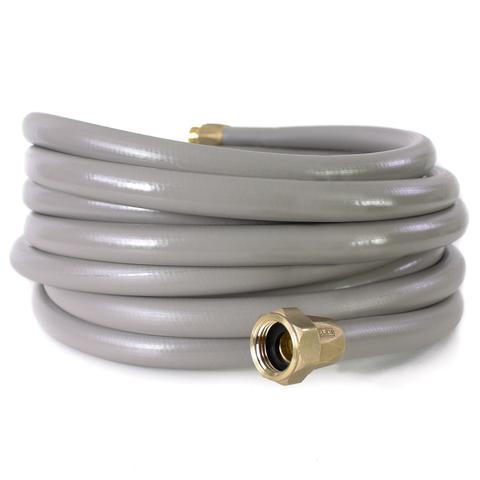
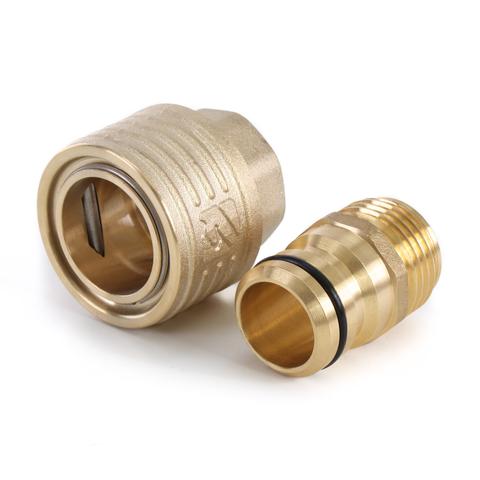
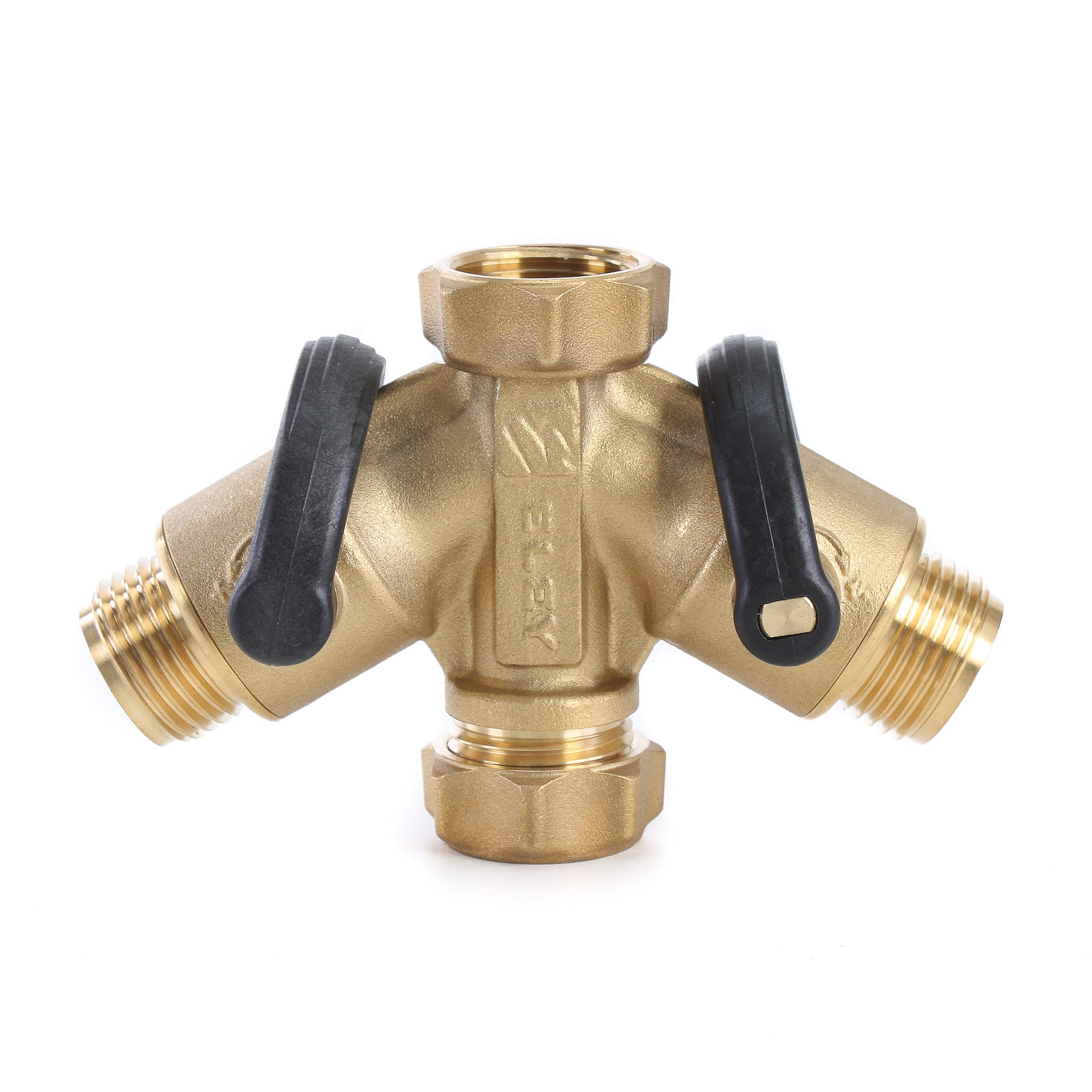
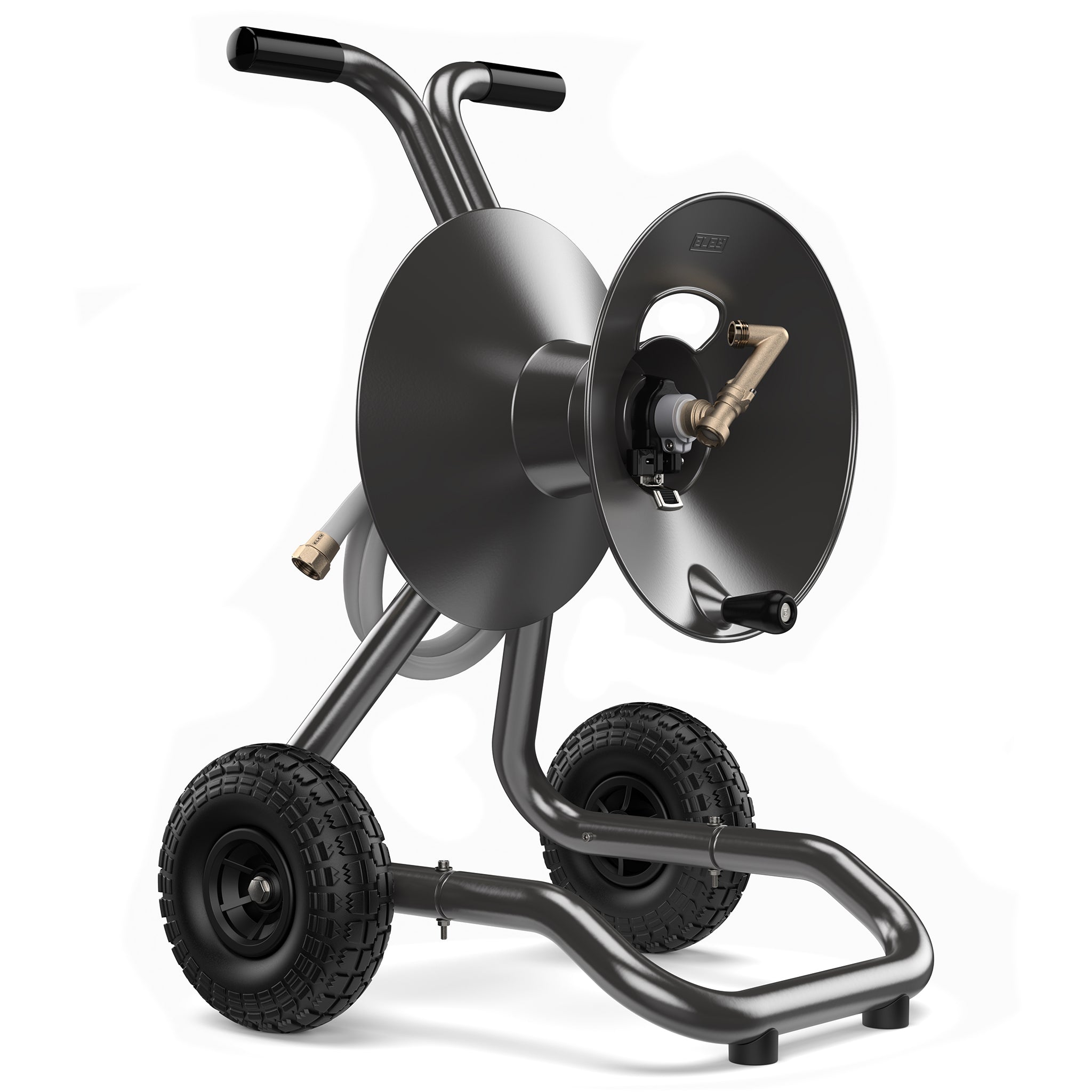
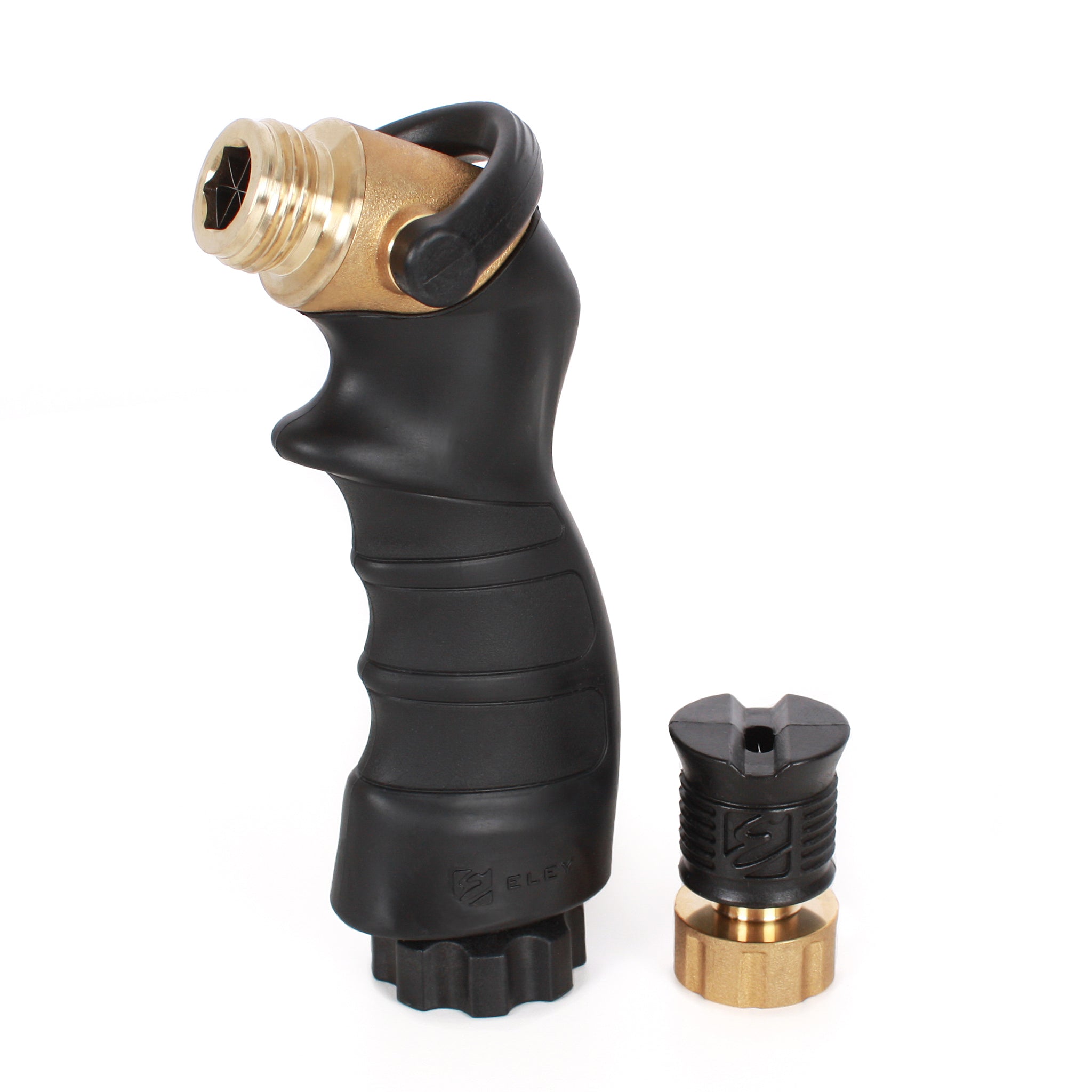
At ELEY, we hear from customers who’ve faced this exact situation. And while our hose reels, garden hoses, and watering tools use high-quality, lead-free brass fittings (learn more about what makes them drinking-water safe here), no product — no matter the label — can override basic chemistry. Put brass and aluminum together, add moisture (fertilizer or salt speeds it up), and electrons start moving. The best protection — for your gear and your patience — is knowing what’s happening and how to stop it.
What is galvanic corrosion?
When two different metals touch in the presence of moisture (plain water will do; salty or fertilized water is faster), they form a tiny electrical circuit. On the galvanic scale, the less “noble” (more reactive) metal — often aluminum — gives up electrons to the more stable one, such as brass or stainless steel. Over time, aluminum pays the price: its surface pits and builds a white, powdery oxide that can lock threads together (5, 6).
You may notice:
-
White, powdery residue around threads (aluminum oxides)
-
Fittings that seize or feel permanently bonded
-
Faster attack in damp areas, coastal air, or where fertilizer salts linger
Think of it like a tiny battery at work — only instead of powering a flashlight, it’s slowly consuming your fittings. Geometry matters, too: a small aluminum area coupled to a larger brass area experiences a higher current density and corrodes faster (2, 5).
Why brass, stainless, and nickel-plated brass are standards
Premium hose reels and watering tools rely on metals like brass, stainless steel, and nickel-plated brass for one key reason:
👉they are compatible materials that resist corrosion and don’t damage each other over time.
These metals sit close together on the galvanic scale, which helps prevent the kind of corrosion and seizing that can ruin fittings.
Why Brass Stands Out
Among these options, brass consistently delivers the best balance of performance and reliability for garden hose applications.
- Naturally corrosion-resistant through years of wet/dry cycles
- Slightly softer metal, allowing washers and O-rings to compress and seal properly
- Machines cleanly for smooth threads and reliable swivels
- Available in modern lead-free formulations that meet drinking-water safety standards
This combination of strength, sealability, and consistency is why brass has become the go-to material for high-quality hose fittings.
Where Stainless and Nickel-Plated Brass Fit
Stainless steel and nickel-plated brass can also perform well—especially in coastal or industrial environments where additional surface protection is beneficial.
However, they come with tradeoffs:
- Nickel-plated brass can wear over time, exposing the base material
- Stainless steel is extremely strong, but not ideal for repeated hose connections due to how it behaves under friction
That’s why many premium systems—including ELEY—use a combination of:
- Brass for fittings
- Stainless steel for structural hardware
- Powder-coated frames for long-term corrosion resistance
Why ELEY uses solid, lead-free brass fittings

Customers sometimes ask: Why not use stainless steel everywhere?
The answer comes down to long-term reliability in real-world use.
- No plating to chip or wear down over time
- Threads remain smooth and easy to connect year after year
- Seals form properly without over-tightening
- Performs consistently across thousands of connect/disconnect cycles
Why Not Stainless Steel for Hose Fittings?
Stainless steel has one critical drawback in this application:
👉 It can gall.
When stainless threads are tightened against another metal—especially stainless—they can cold-weld under friction, permanently seizing the connection.
For something like a garden hose that’s regularly attached and removed, that’s a major risk.
Built for Safe, Reliable Performance
ELEY uses solid, lead-free brass fittings certified to NSF/ANSI drinking water standards, ensuring:
- Safe water contact
- Smooth, reliable threading
- Long-term durability without seizing or degradation
👉 In short: brass delivers the most consistent, worry-free performance over time.

How aluminum fittings entered the picture — and why
If brass and stainless work so well, why are so many hoses sold with aluminum ends today? Two big reasons: cost and weight.
In the late 2000s, copper prices spiked — and brass (a copper alloy) followed (12). Manufacturers pivoted to aluminum: lighter, cheaper, and fast to machine. At the same time, lead-content rules tightened in potable plumbing (RLDWA 2011; effective 2014), and consumer attention to “lead-free” labels rose. Garden hoses aren’t typically classified as potable products, but “lead-free aluminum” made for an appealing box sticker (9, 10, 11).
Many aluminum fittings are anodized for looks and initial protection. The problem? Thread contact wears through that thin oxide quickly. Bare aluminum + brass + moisture = galvanic fuse. So yes, the switch cut weight and cost — but often at the expense of long-term reliability.
That’s why material choice matters—but just as importantly, how your system is set up plays a big role in preventing corrosion.
3 ways to prevent galvanic corrosion
1. Match your metals
Prefer brass-to-brass connections (hose ends, quick-connects, spigots/adapters). If you must mix, stainless or nickel-plated brass is generally less reactive next to brass than aluminum. (1, 2, 5, 6)
2. Break the circuit
Electrically isolate dissimilar metals with a non-conductive washer/spacer (nylon, PTFE, acetal) or use a stainless/nickel-plated GHT adapter between them. (1, 2)
3. Protect threads & seals (adjunct to #1–2)
Apply a thin film of 100% silicone grease (Avoid petroleum products; they can degrade rubber) on threads and O-rings to help exclude moisture. This does not replace matching metals or using an isolator. Reapply at spring setup and after heavy salt/fertilizer exposure or whenever threads feel dry. (3, 4)
Good housekeeping (optional; standards-based, not ELEY’s long-term fix)
If you choose to follow general corrosion-control practices, disconnect and dry fittings after use and rinse off salts/fertilizer residue when exposed. For durable prevention we recommend Options 1–3. (1, 2)
Using high-quality, compatible materials—like solid, lead-free brass fittings—makes these steps even more effective and helps prevent problems before they start.
What if the fittings are already seized?
If dissimilar-metal fittings — a watering tool, outdoor spigot, or a reel’s brass swivel — have fused, they typically won’t separate without damage. The reliable path is cut and repair.
If the stuck part is the hose end, salvage the hose by cutting away the damaged section and installing a new lead-free brass fitting. Skip the acids or risky separation methods; go straight to a permanent, professional-grade fix:
Use the ELEY Garden Hose Fitting Repair Tool (5/8") to press on a matching ELEY full-flow brass female or male fitting. This tool is engineered to work only with ELEY repair fittings for correct interference and seal — other fittings aren’t compatible.You’ll need

-
ELEY Garden Hose Fitting Repair Tool (5/8") (SKU 1190)
-
A sharp hose cutter/utility knife
-
Hand or dish soap to ease assembly
Why this works
-
Creates a drinking-water-safe, lead-free brass connection — no hose clamps, no temporary adapters
-
Let's you salvage or customize hoses instead of replacing them entirely
Step-by-step

-
Cut the seized end squarely behind the damaged fitting.
-
Assemble the repair tool around the hose and your ELEY fitting; follow the included assembly video. (male first half; female begins ~ 5 minute mark).
-
Press the fitting in using the tool’s screw — hand-tighten with the provided hex key or 8 mm socket. Do not use power tools.
-
Inspect for full seating. That’s it.
Compatibility notes
-
For 5/8-inch ID hoses, OD ≈ 0.85–0.90 in, wall ≈ 0.10–0.15 in, round profiles only
-
Not compatible with collapsible, metal-covered, multi-sided, or washing-machine hoses
-
Works on many non-ELEY hoses within spec (pressed fittings are single-use)
-
ELEY polyurethane hoses are rated 150 PSI; other hoses vary by design
Pro move: Need a custom length or an M–M / F–F jumper? Cut to size and press the ends you want.

Swivel replacement if corrosion occurred at the swivel
If the hose end has fused to the swivel, the swivel is typically not recoverable. Replace it with our current ELEY Hose Reel Swivel (Item #4291), which replaces all previous swivel models. It retrofits existing reels — please watch the installation video on the product page, as it attaches differently than older versions.
If your hose is stuck to the outdoor spigot (hose bib)
What’s happening:
A dissimilar-metal pair (often an aluminum hose end on a brass spigot) has likely galvanically fused. Once seized, forcing it can twist the bib, crack joints inside the wall, or deform threads.
Best course of action:
-
Don’t force it with wrenches or acids. You’ll usually damage the spigot or the plumbing behind it.
-
Plan to replace the spigot (hose bib). This is typically a licensed plumber job—fast and straightforward once they’re on site.
-
Salvage your hose: cut off the stuck end and use the ELEY Garden Hose Fitting Repair Tool (5/8") to press on a new lead-free brass fitting.
If you’re calling a plumber (what to ask for):
-
Swap in a lead-free, all-brass outdoor faucet (hose bib).
-
If you get freezing winters, you may want to ask if a frost-proof/freeze-proof sillcock is best for your situation
-
Make sure it includes an anti-siphon vacuum breaker (this is the code-required backflow device for hose bibs). If it’s not built in, ask for a listed screw-on hose-connection vacuum breaker.
Warranty Note and Support
Galvanic corrosion is not covered by ELEY’s 10-Year Hose Warranty because it’s driven by environmental/application factors, not a material defect. Any modification beyond the hose’s original manufactured condition — including cutting, installing new fittings (even with ELEY tools), or building custom lengths — voids the hose warranty. You can review the full warranty on our site or contact customer service; we’ll help you decide whether cut-and-repair or a replacement makes more sense for your setup.
The Takeaway
Galvanic corrosion is chemistry at work. Left alone, it can seize fittings and shorten the life of your watering setup. With a few smart habits — match metals, break the circuit, keep threads protected — you’ll keep everything spinning smoothly.
Protect your investment. Explore ELEY’s rustproof reels, brass fittings, and hoses — made from drinking-water-safe materials and built for decades of leak-free performance.

FAQ
Q1: How do I fix a stuck hose fitting caused by galvanic corrosion?
Cut off the seized end and press on a new lead-free brass fitting with the ELEY Garden Hose Fitting Repair Tool (5/8"). It creates a factory-quality, permanent connection (see “What if the fittings are already seized?”).
Q2: Will this repair work on any hose?
It’s designed for 5/8-inch ID, round-profile garden hoses. Not for collapsible/expandable, metal-covered, multi-sided outer covers, or washing-machine hoses.
Q3: Is galvanic corrosion covered under ELEY’s 10-Year Hose Warranty?
No. It results from external materials and environmental conditions (e.g., dissimilar metals, lingering moisture, salts/fertilizers) and is not covered.
Q4: Does modifying a hose (cutting/adding fittings) affect the warranty?
Yes. Any modification, alteration, or repair beyond the hose’s original factory condition voids the hose warranty—even when using ELEY’s own repair tool and fittings.
Q5: My hose end fused to the swivel. Is the swivel covered, and what should I do?
Damage from galvanic corrosion is not covered. A fused swivel is typically not recoverable. Replace it with the current ELEY Hose Reel Swivel (Item #4291), which replaces all prior swivel models.
Q6: What should I use to prevent galvanic corrosion?
Prioritize these three:
-
Match your metals (prefer brass-to-brass; stainless or nickel-plated brass if mixing). (1, 2, 5, 6)
-
Break the circuit with a non-conductive washer/spacer (nylon/PTFE/acetal) or a stainless/nickel-plated GHT adapter. (1, 2)
-
Protect threads & seals with a thin film of 100% silicone grease. (3, 4) Avoid petroleum-based products.
Optional, standards-based housekeeping (not ELEY’s long-term fix): disconnect/dry after use and rinse salts/fertilizer when exposed. (1, 2)
Q7: Is vinegar or other acids recommended to free stuck fittings?
No. Studies show acetic acid can promote pitting on aluminum, especially with chlorides present. The reliable fix is cut-and-repair. (7, 8)
Q8: Which lubricant is safe on seals and O-rings?
Use 100% silicone grease (potable-water/NSF-type). Avoid petroleum-based products; they can degrade rubber components. (3, 4)
Q9: Can I make custom lengths or same-end hoses (M–M / F–F)?
Yes—the repair tool allows custom configurations. Note that modifying a hose voids the hose warranty.
References
- Nickel Institute (Tuthill, A.H.) — Managing Galvanic Corrosion: practical design/selection and electrical isolation guidance.
- NASA-STD-6012A (2022) — Corrosion Protection for Space Flight Hardware: dissimilar-metal control, area ratios, moisture exclusion, isolation practices.
- DuPont — MOLYKOTE 111 Technical Data Sheet: 100% silicone compound for O-rings/valves; non-curing moisture barrier; potable-water certifications (e.g., NSF/ANSI 61).
- Parker — O-Ring Handbook (PTD 5705): lubricant compatibility, silicone for assembly/protection; avoid petroleum greases on many elastomers.
- Palraj S. et al. Journal of Marine Science and Application: galvanic interactions of aluminum–α-brass; area-ratio effects.
- Zhang X. et al. Engineering Failure Analysis (2023): Al 5083/H62 brass couples in 3.5 wt% NaCl.
- Kovač J. et al. Processing and Application of Ceramics (2023): aluminum in weak acetic acid + chloride; pitting observed.
- Adams F.V. et al. Materials Today: Proceedings (2021): aluminum alloys in acetic acid; pitting susceptibility.
- EPA — Use of Lead-Free Pipes, Fittings, Fixtures, Solder, and Flux for Drinking Water (SDWA/RLDWA overview).
- EPA — Lead-Free Requirements & Non-Potable Exemptions (clarifies irrigation/outdoor products).
- Copper Development Association — NSF/ANSI 61 scope; garden hose outlets typically not covered by potable standards.
- Macrotrends — COMEX copper price history (brass cost driver).