
Quick Summary
A leaking garden hose reel is usually caused by one of three issues:
- A failed inlet hose
- A damaged swivel
- A loose connection between the inlet hose and swivel
Fortunately, diagnosing the source of the leak is typically quick and easy. This guide will help you identify the problem, determine whether it may be covered under warranty, and find the appropriate repair or replacement solution.
Common Causes of a Leaking Hose Reel
If your hose reel is leaking, there are only three likely sources:
- The inlet hose has failed.
- The brass swivel has failed.
- The connection between the inlet hose and swivel has loosened.
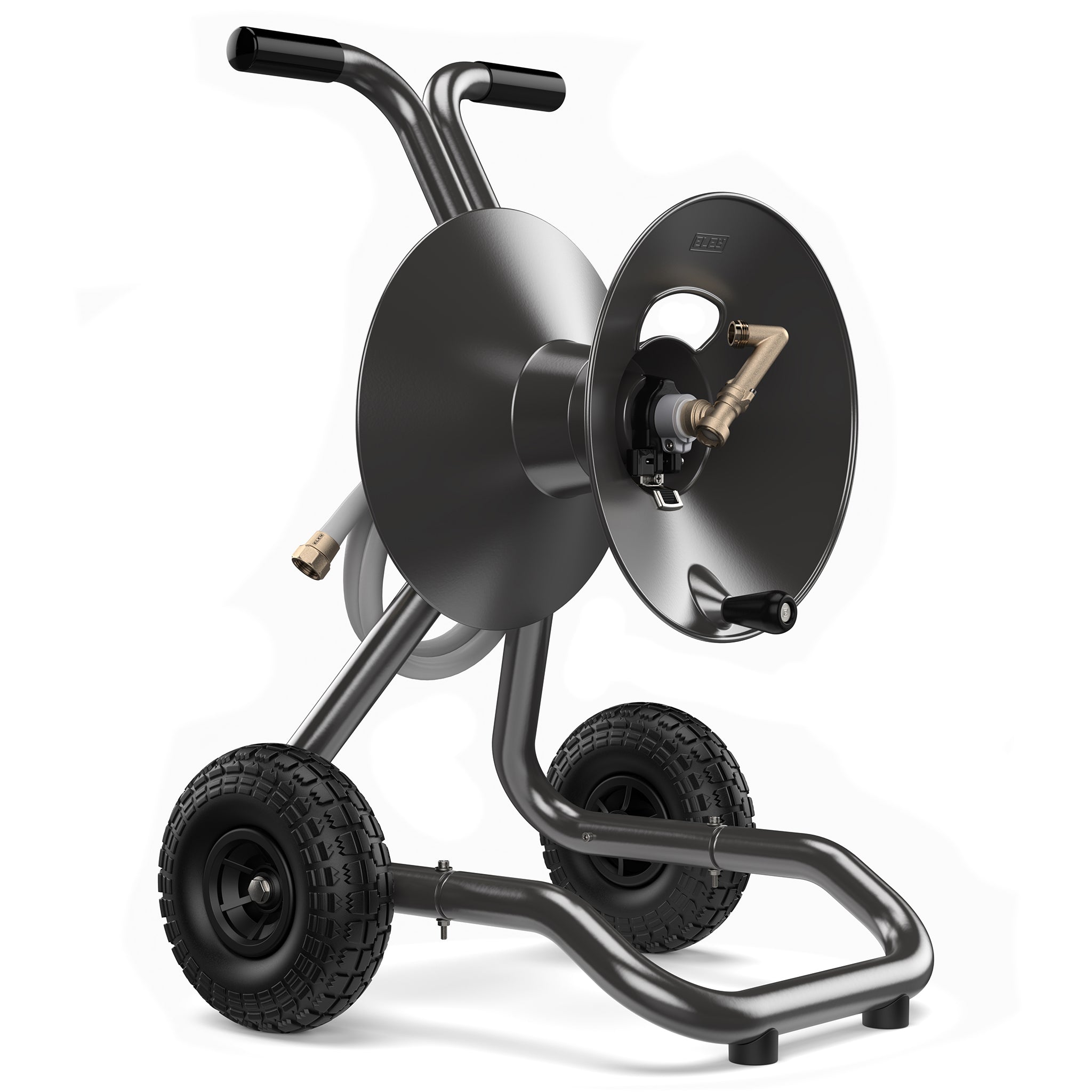
The entire plumbing system of an ELEY® and Rapid-Reel™ garden hose reel consists of just two components:
- Inlet hose
- Brass swivel
Because the system is so simple, finding the source of a leak is usually straightforward.
Video: How to Diagnose a Leaking Garden Hose Reel
The short video below demonstrates how to inspect the inlet hose, swivel, and hose connections to identify the source of a leak.
Hose Reel Leak Troubleshooting
Is the leak coming from the inlet hose?
➡ Proceed to the Inlet Hose Has Failed section below.
Is the leak coming from the swivel?
➡ Proceed to the Swivel Has Failed section below.
Is the leak coming from the connection between the inlet hose and swivel (usually leaks from the back of the hose reel)?
➡ Tighten the connection and test the reel again.
Not sure where the leak is coming from?
➡ Watch the troubleshooting video and inspect each component individually.
The Inlet Hose Has Failed
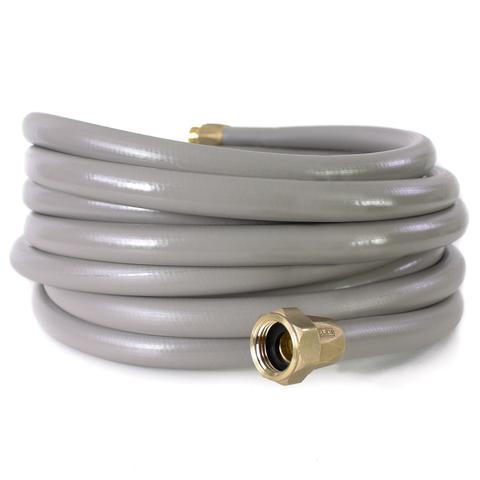
The inlet hose (also called a feeder hose or supply hose) connects your spigot/faucet to the hose reel.
Common Signs of a Failed Inlet Hose
- Cracks or splits in the hose
- Bulges or damaged sections
- Leaks near or at the hose fittings
- Visible abrasion or punctures
Is it Covered Under Warranty?
If:
- The hose reel and/or inlet hose is less than 10 years old, and
- The failure was not caused by freezing temperatures, UV rays, pets, misuse, accidents, or other warranty exclusions
Unsure About Freeze Damage? If you're unsure whether the failure was caused by freeze damage, please visit our Assessing Freeze Damage Guide.
Please submit a Warranty Claim Form.
To help us process your request quickly, include:
- A photo of the damaged area, or
- A short video showing the leak
Our support team will review the claim and respond promptly.
Not Covered Under Warranty?
Replacement inlet hoses are available in both standard and extended lengths, 5/8-Inch Garden Hose:
- Standard 6½-foot inlet hose
- Extended 12-foot inlet hose
Need a custom length?
Visit our Garden Hose Repair Tool page to create an inlet hose from a standard 5/8-inch garden hose cut to your preferred length.
The Swivel Has Failed
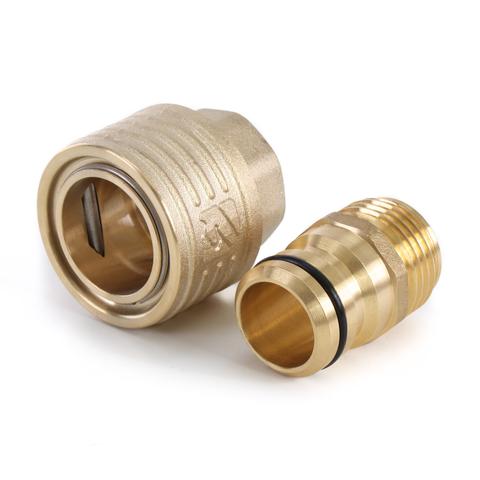
The swivel is the rotating brass fitting located at the front center of the hose reel.
A failed swivel is one of the most common causes of hose reel leaks, particularly after improper winterization or freeze damage.
The good news is that swivel replacement is typically quick and easy.
Common Signs of a Failed Swivel
- Water is leaking from the body of the brass swivel component
- Leaks that continue after tightening connections
- Cracks caused by freezing temperatures
- Visible damage to the swivel body
Is it Covered Under Warrranty?
If:
- The hose reel is less than 10 years old, and
- The swivel was not damaged by freezing temperatures, UV rays, pets, misuse, abuse, or other warranty exclusions
Unsure About Freeze Damage? If you're unsure whether the failure was caused by freeze damage, please visit our Assessing Freeze Damage Guide.
Please submit a Warranty Claim Form.
A photo or short video of the failed swivel will be required for claim evaluation.
Not Covered Under Warranty?
If the reel is more than 10 years old or the swivel was damaged by freezing temperatures, misuse, abuse, or another excluded cause, you’ll need to purchase a replacement swivel.
Visit our Hose Reel Troubleshooting & Replacement Parts page to locate the correct replacement swivel for your model.
NOTE: For hose reels, our warranty covers the replacement of the defective component, not the entire unit.
FAQ
Why is my hose reel leaking from the front brass component?
+
A leak from the front center of the reel is often caused by a failed swivel assembly. Freeze damage is one of the most common causes. Please check out our freeze damage guide to assess whether this is likely the issue.
Can a hose reel swivel be repaired?
+
In most cases, replacing the swivel is the easiest and most reliable solution. Unless it is the expandable frost gasket component on the 4291 swivel. That can be replaced.
Is freeze damage covered under warranty?
+
No. Damage caused by freezing temperatures is not covered under ELEY's warranty. Proper winterization is required to help prevent freeze-related failures.
What if the female fitting on my hose is leaking at the faucet or spigot?
+
If the female fitting on your hose is leaking, the washer may need to be replaced. If your hose has an older flat washer gasket, we recommend replacing it with our Garden Hose Washer (Item 1113), which may provide a better seal. If replacing the washer does not stop the leak, please submit a Warranty Claim Form for further assistance.
What if tightening the inlet hose connection doesn't stop the leak?
+
If tightening the connection between the inlet hose and swivel does not stop the leak, inspect both components carefully. The leak may be coming from a damaged inlet hose, a failed swivel, or a worn hose washer rather than the connection itself.
What if I'm not sure whether the inlet hose or swivel is leaking?
+
Please watch the troubleshooting video above and inspect each component individually. If you're still unsure, contact our customer support team and include photos or a short video of the leak.